
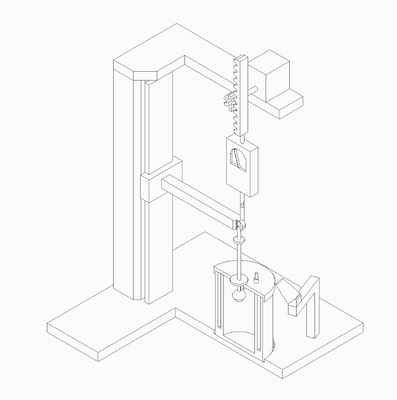
A device for testing the physicochemical properties of fuels, particularly those containing bio-components
Description: The invention relates to a device for testing the physicochemical properties of fuels containing bio-components, intended for use in internal combustion engines, construction machinery and agricultural tractors.
Previous methods for assessing this type of fuel relied solely on chemical and chromatographic analyses, which required expensive equipment and a lengthy sample preparation process, whilst conventional capillary or rotational viscometers did not adequately reflect the actual operating conditions of the fuel within the engine’s fuel supply system. The aim of the invention is to develop a device enabling repeatable testing and precise identification of the amount of bio-component introduced into the fuel. The device operates by filling the tank with the fuel sample under test and setting the initial temperature to 23°C using cartridge heaters. The measuring element is lowered to the starting position, after which, upon releasing the lower cable, it falls freely into the liquid under test. The fall time is recorded, which serves as a measure of the sample’s relative viscosity. The element is then raised at a speed of 10 mm/min, and a strain gauge records the resistance to movement, reflecting the adhesive and rheological properties of the fuel. Once the measuring element has been raised above the tank lid, a camera records an image of the deposit forming between the hemispheres, enabling an assessment of the fuel’s tendency to deposit on working surfaces. The measurement cycle is repeated at successive temperatures up to 95°C, and the results obtained are compared with reference data for ethanol, acetone and heptane of known viscosities. A key advantage of the invention is the integration into a single measuring system of three previously independent analyses: measurement of relative viscosity as a function of temperature, measurement of the resistance to movement in the test medium, and assessment of the tendency to form deposits on working surfaces. This enables the rapid and reproducible identification of the bio-component content in the fuel, early detection of degrading additives, and assessment of the fuel’s impact on the durability of engine components and exhaust emission levels.
Organisation: Lublin University of Technology
Innovator(s): Mateusz Klepka, Rafał Longwic, Przemysław Sander
Category: Nanotechnology, Materials & Engineering
Country: Poland